

Table of Contents
- Why Vintage Inspired Baseball Caps Are Worth Buying Online
- Key Features to Look for in Retro Style Caps
- Best Vintage Baseball Cap Brands to Shop Online
- How to Clean Vintage Baseball Caps Without Damaging Them
- Styling Tips for Baseball Apparel: Caps, Tees, and Jerseys
- Fit Guide: Finding the Right Cap for Different Head Shapes
- Where to Buy Vintage Inspired Baseball Caps Online
- Frequently Asked Questions
Last Updated: September 11, 2026
Why Vintage Inspired Baseball Caps Are Worth Buying Online
The vintage inspired baseball cap has become a staple of baseball family life, and buying one online opens up far more variety than any local sporting goods store can stock. At Peffercorn Athletics, we hear from parents constantly: they want headwear that feels connected to the game's history without looking like a costume. That balance is exactly what separates a well-made retro cap from a cheap novelty item.
The appeal comes down to three things: nostalgia, everyday wearability, and a look that works with everything from jeans to a team jersey. A classic silhouette carries a nostalgic touch that modern performance caps often lack. And because online retailers specialize in heritage style rather than mass-market basics, you can find period-correct details like felt applique lettering and unstructured crowns that rarely appear on store shelves.
Here's what most guides get wrong: they treat vintage caps as purely decorative. In practice, a good retro cap is headwear you'll reach for daily, so construction matters as much as looks. Below, we'll cover the features worth paying for, how to clean and style your caps, and where to shop with confidence.
Key Features to Look for in Retro Style Caps
The most important feature is construction quality, because it determines whether your cap survives a season of tournament weekends or fades by June.
Vintage inspired baseball caps are headwear designed to echo mid-century baseball styles, typically featuring a short brim, a soft unstructured crown, and period-correct graphics. Look for these details before you buy:
- 6-panel construction for a structured, classic shape that holds up over time
- A short brim for the retro aesthetic, versus the wide brim of modern caps
- Felt applique or embroidery rather than printed graphics that crack and peel
- Adjustable closures like a snapback or a fitted band, depending on your preference
- Reinforced stitching at the crown and brim, the two spots that fail first
Durability and craftsmanship separate a cap you'll wear for years from one you'll toss by August.
Materials and Construction: Wool Serge vs. Cotton Twill
Wool serge and cotton twill are the two materials that define authentic reproduction caps, and each behaves differently over time.
Wool serge is the heavier, more traditional option. It holds its shape, resists sagging, and develops a subtle patina with wear that many collectors prize. The trade-off is warmth, which makes wool serge a fall and spring favorite rather than a July tournament pick.
Cotton twill is lighter, breathable, and easier to care for. It's the better choice for long summer days in the bleachers, and it takes embroidery cleanly. Most vintage-inspired caps sold today lean on cotton twill for exactly that reason.
Best Vintage Baseball Cap Brands to Shop Online
The best vintage baseball cap brands fall into three distinct camps, and knowing which camp you're shopping in tells you more about quality than any marketing copy will.
Heritage reproduction makers build new caps to period specifications, wool serge crowns, leather sweatbands, felt applique lettering, and short brims. These brands publish fabric weights, name their mills, and often date their designs to a specific decade. If a listing says "inspired by 1950s minor league caps" and then shows you the actual 1950s cap it was patterned from, that's a serious maker.
True vintage and deadstock sellers move original caps from the 1940s through the 1990s. Their inventory is one-of-a-kind, so the buying signals are different: you want clear photos of the sweatband, the union label, and any manufacturer tag. A seller who photographs the inside of the cap is telling you they know what collectors look for.
Modern lifestyle brands blend retro graphics with current construction. This is the widest category and the hardest to judge, because "vintage-inspired" can mean anything from a faithful reproduction to a plain cap with a distressed logo.
How to Tell a Serious Maker From a Gimmick
A few signals separate the two, and none of them require you to be a collector:
- Named materials. "Wool serge," "cotton twill," "brushed cotton", not "premium fabric."
- Stated construction. 6-panel vs. 5-panel, structured vs. unstructured, taped seams vs. raw.
- Real customer photos. Studio shots hide fit problems; customer photos expose them.
- A consistent sizing chart. Brands that publish head circumference ranges in inches are brands that expect repeat customers.
- A point of view. Period-correct typography, retro mascot illustrations, or a documented design reference.
What to Look for on the Label
If you're buying true vintage rather than a reproduction, the label is your best evidence. Union-made caps from the mid-20th century often carry a union tag inside the crown, and manufacturer tags frequently list a style number and sometimes a date code (si.edu). A cap with a paper tag still attached and no wear on the sweatband is likely deadstock, never worn, never sold. That's a different product from a worn original, and it should be priced and cared for differently.
When you're comparing brands, the question isn't which one is cheapest. It's whether the maker can tell you what decade they're referencing, what the cap is made of, and how it's put together. If they can't answer all three, you're buying a look, not a cap.
How to Clean Vintage Baseball Caps Without Damaging Them
Hand washing is the safest method for cleaning vintage baseball caps, especially wool serge or caps with felt applique (wikihow.com). Machine washing can crush the crown, warp the brim, and break down the adhesive that holds structured fronts in place.
Follow this sequence:
- Fill a basin with cool water and a small amount of mild detergent.
- Submerge the cap and gently work the solution into the fabric with your fingers.
- Focus on the sweatband, where oils and salt build up fastest.
- Rinse with cool water until no suds remain.
- Reshape the crown by hand and stuff it lightly with a clean towel.
- Air dry away from direct heat or sunlight, which can fade dyes.
For spot stains, dab rather than scrub. Scrubbing lifts the fibers and creates the fuzzy wear patches that make a cap look tired.
Styling Tips for Baseball Apparel: Caps, Tees, and Jerseys
Styling baseball apparel works best when you let one piece lead and keep the rest simple, which is why a retro cap anchors an outfit so well.
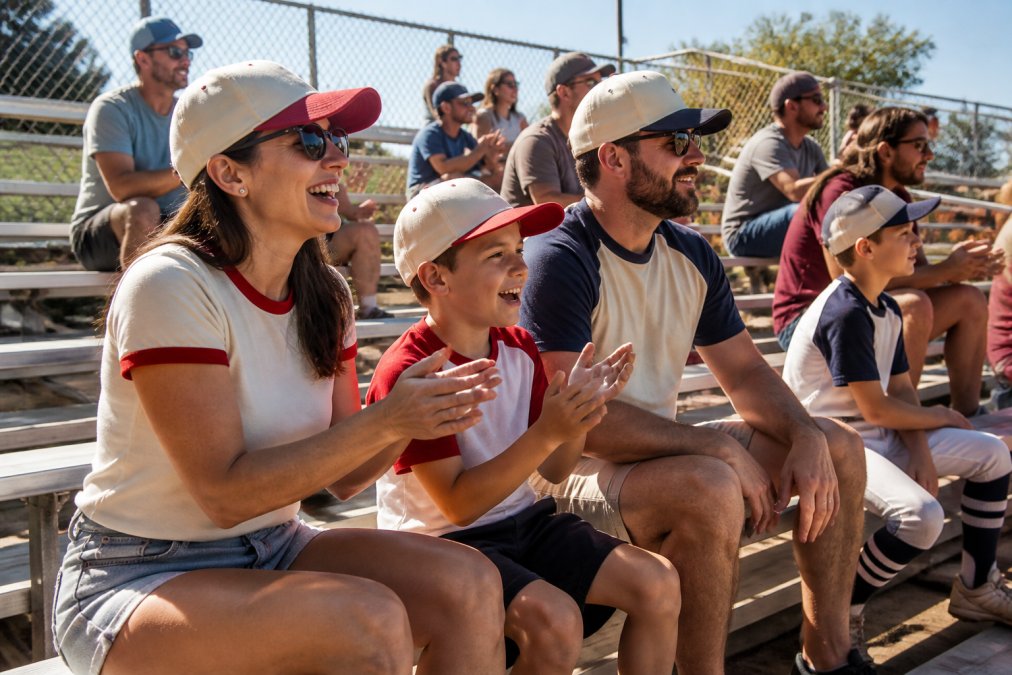
A few combinations that hold up:
- Pair a cap with a plain tee and jeans for game-day comfort that doesn't look like a uniform.
- Match your cap's color to your child's team colors for a coordinated, supportive look.
- Layer a vintage jersey over a tee for cooler evening games.
- Keep graphics to one focal point: if the tee has a bold retro mascot, let the cap stay understated.
The retro aesthetic works because it feels intentional without being fussy. You don't need to be a "fashion person" to pull it off, and that's the point.
Fit Guide: Finding the Right Cap for Different Head Shapes
The right fit comes down to two measurements: head circumference and crown depth, and most fit problems trace back to ignoring one of them.
Measure your head circumference by running a soft tape measure around your head just above the ears and across the middle of your forehead. Compare that number to the brand's sizing chart rather than assuming you're a "one size fits most."
Head shape matters too:
- Round faces suit a taller, more structured crown, which adds visual length.
- Longer faces work well with a shorter crown and a short brim.
- Wider heads benefit from adjustable snapback closures for a precise fit.
- Smaller heads often do better with youth sizing or unstructured crowns that sit lower.
If you're between sizes, size up and use the adjustment. A cap that's slightly loose can be tightened; one that's too small will give you a headache by the third inning.
Where to Buy Vintage Inspired Baseball Caps Online
Where you buy matters as much as what you buy, because the two main channels, specialist retailers and general marketplaces, carry very different risks.
Specialist retailers stock curated selections, publish detailed fabric and construction notes, and usually have sizing charts built around actual head measurements. The trade-off is narrower inventory and less discounting. General marketplaces offer more listings and lower prices, but you're often buying from a reseller who may not know the difference between a reproduction and an original.
A Buying Checklist Before You Check Out
Run through these before you commit, especially on any cap described as vintage:
- Real customer photos. Look for at least a few photos taken by buyers, not just studio shots.
- Return policy, in writing. Confirm the window and whether return shipping is on you. One-of-a-kind vintage items are frequently final sale, know that before you order.
- Secure checkout. The URL should show a padlock and start with https. Avoid sellers who only accept payment through peer-to-peer apps with no buyer protection.
- Sizing specifics. Head circumference ranges in inches, plus crown depth if the seller provides it.
- Bulk and team orders. If you're outfitting a team or buying gifts, ask whether the seller offers quantity pricing or coordinated sets.
Authentication: Telling a Reproduction From an Original
This is the gap most buying guides skip, and it's the one that costs people money. A modern reproduction and a genuine mid-century cap can look nearly identical in a listing photo. Here's how to tell them apart:
- Sweatband material. Older caps typically used leather or a cotton twill band. Modern reproductions often use synthetic blends or foam-backed fabric.
- Stitching. Original caps from the mid-20th century were often chain-stitched. Modern reproductions usually use lock stitching, which looks cleaner and more uniform.
- Tags and labels. Union tags, manufacturer style numbers, and paper hang tags are strong signals of age. A cap with a modern woven brand label and no other tagging is almost certainly new.
- Brim construction. Older brims were often cardboard or early plastic inserts. They feel different, lighter, sometimes slightly warped with age. Modern brims are typically plastic and hold a crisp curve.
- Smell and patina. Genuine age produces a distinct mustiness and uneven fading. Artificial distressing tends to be uniform and concentrated at the edges.
Why Buying From a Specialist Usually Wins
A specialist retailer has already done the authentication and curation work. You're not gambling on a marketplace listing from a seller with three reviews and no return policy. You're also more likely to get accurate sizing guidance, because specialists hear the same fit questions over and over and build their charts around the answers.
Peffercorn Athletics stocks vintage-inspired caps, tees, and jerseys for parents and young players, with retro mascot illustrations and sizing built for real families. If you want the retro look without the authentication guesswork, starting with a curated collection is the faster path.
Frequently Asked Questions
What makes a baseball cap look vintage?
A cap looks vintage when it has a short brim, unstructured crown, and materials like wool serge or cotton twill that develop a patina over time. Distressed detailing, felt applique patches, and retro mascot illustrations also signal a vintage aesthetic. The classic 6-panel construction with a snapback or fitted closure is another hallmark. These features mimic caps from the 1940s through the 1970s, giving them a nostalgic touch that modern performance caps lack.
How do I style a vintage inspired baseball cap?
Pair a vintage inspired baseball cap with a plain tee and jeans for an easy, everyday look. For a game-day outfit, match the cap to a retro jersey or a team-colored hoodie. A short brim cap works well with a casual button-down, while a wide brim style suits a more relaxed, streetwear-inspired outfit. Keep the rest of your look simple so the cap stands out. Styling tips for baseball apparel often recommend sticking to two or three colors to avoid clashing with the cap's design.
Are vintage inspired baseball caps better quality than modern ones?
Quality depends on the brand and materials, not just the style. Vintage inspired caps made from wool serge or heavy cotton twill often feel more durable than lightweight polyester caps. Look for reinforced stitching, a structured or unstructured crown that holds its shape, and a sweatband that wicks moisture. Many retro-style caps use the same 6-panel construction as modern caps, so the main difference is the fabric weight and the nostalgic design details.
How should a vintage inspired baseball cap fit?
A well-fitting cap sits comfortably on your head without leaving deep marks on your forehead. Measure your head circumference with a soft tape measure just above your ears. Most fitted caps come in sizes like 7 1/8 or 7 1/4, while snapback and adjustable styles offer a range. The brim should sit about an inch above your eyebrows. If you have a rounder face, a structured crown adds height; for a longer face, an unstructured crown balances proportions.

